

In a world saturated with things, the most powerful gift you can offer is one that means something — a cultural gift that carries a story, holds a history, and invites the person who receives it to wear that story on their skin. This is the quiet revolution at the heart of wearable art.
Think about the last time you received a truly memorable gift. Chances are it wasn't the most expensive one. It was the one that felt chosen — that seemed to say, I saw you, I thought of you, I found something as particular as you are. A unique gift for her doesn't have to be rare in the sense of price. It simply has to be rare in the sense of meaning.
Wearable art gifts occupy exactly that space. They bridge the worlds of fine art and intimate gesture. When you offer someone a piece of wearable art rooted in Amazigh culture and Berber symbols, you're not simply wrapping a garment in tissue paper. You're handing over a fragment of human history, a living symbol, an ethical act, and an aesthetic statement — all in one.
This guide will walk you through everything you need to know to choose the perfect cultural gift: why wearable art matters, what makes an artisan gift genuinely unique, how Berber traditions translate into contemporary design, and which occasions call for art you can actually wear.
Wearable Art: When Fashion Becomes a Walking Gallery
The term wearable art emerged in the late 20th century to describe garments that blur the boundary between clothing and fine art. But the practice is ancient. Long before the fashion industry existed, humans adorned themselves with symbols, dyes, and woven patterns that communicated identity, spiritual affiliation, and social belonging.
What makes contemporary wearable art so compelling — and such a powerful artisan gift — is precisely this continuity. When you put on a piece by an independent artist drawing on cultural heritage, you join a tradition of human beings who have always used clothing as a form of expression far richer than mere utility.
Art historians often draw a line between decorative arts (objects that serve a function and are also beautiful) and fine arts (objects created purely for aesthetic or intellectual purposes). Textile art has historically occupied an awkward position in this taxonomy — too useful to be taken entirely seriously as "art," too beautiful and conceptually rich to be dismissed as craft. That tension is now largely resolved. Institutions like the Victoria and Albert Museum, the Metropolitan Museum of Art, and Centre Pompidou have all mounted major exhibitions treating fashion and textiles as legitimate art forms. The body, it turns out, is the oldest gallery there is.
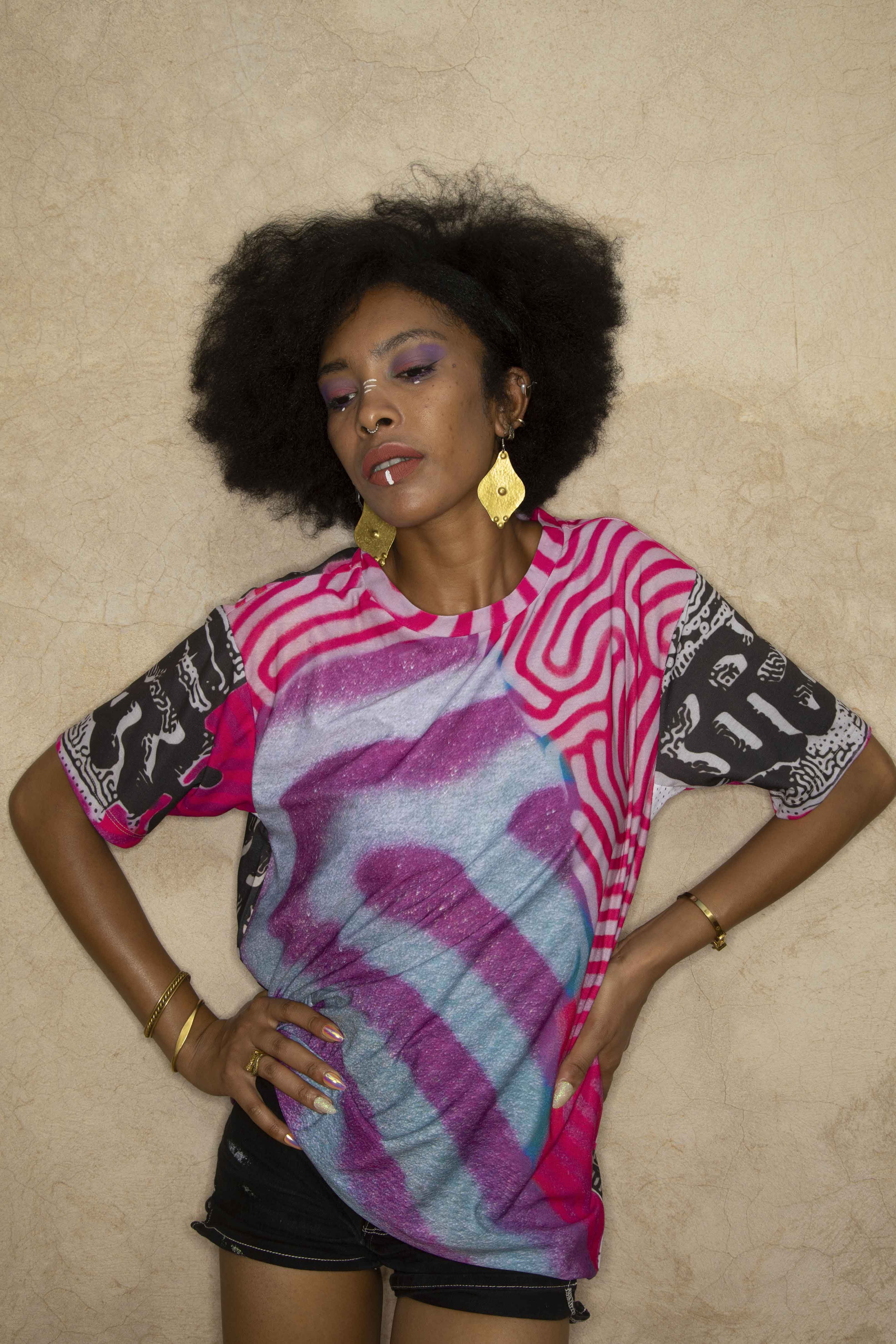
When you offer art you can wear as a gift, you offer an object that will move through the world with the person who receives it. A painting stays on a wall. A sculpture stays on a shelf. But a piece of wearable art goes to dinner parties, walks through markets, sits across from strangers on trains. It is, in the most literal sense, a walking gallery — one that the wearer curates with their own presence, personality, and choice of when to bring it out into the light.
5 Reasons to Choose a Cultural Artisan Gift
1. Uniqueness and Authentic Rarity
Mass production has made it nearly impossible to offer something truly singular through conventional retail channels. The same bag, the same candle, the same printed scarf — available in a hundred online shops, shipped from the same warehouses. An artisan gift breaks entirely with this logic.
A piece of wearable art produced in limited editions — or created entirely by hand — carries a built-in scarcity that has nothing to do with artificial marketing. It is rare because it took time, skill, and genuine creative investment to make. The person who receives it will not encounter their twin at a party. They will not find it discounted in an end-of-season sale. That rarity is a form of respect.
2. Supporting Artists and Living Traditions
When you choose an artisan gift, you participate in an economy of meaning as well as an economy of exchange. Your purchase directly sustains an artist's practice, their studio, their research into cultural heritage, and their ability to continue creating.
This matters in ways that extend beyond the individual transaction. The traditions embedded in Amazigh art — the geometric patterns, the protective symbols, the chromatic codes of North African art — are living traditions. They survive because artists choose to engage with them, learn them, reinterpret them, and bring them to new audiences. Buying a piece of this work is an act of cultural conservation as much as it is an act of personal gifting.
"Every Berber symbol woven into a garment is a small act of resistance against forgetting. When you wear it, you become part of that resistance."
3. Ethical Fashion vs. Fast Fashion
The environmental and human cost of fast fashion has become impossible to ignore. The fashion industry is among the world's most polluting sectors — responsible for roughly 10% of global carbon emissions, vast water consumption, and labor conditions that often fall far short of basic dignity. When you choose an ethical fashion gift for her, you make a statement that quietly repudiates all of this.
Ethical fashion gifts are typically produced in smaller quantities, with attention to material sourcing, fair compensation for makers, and environmental impact at every stage of production. They are designed to last — not to fall apart after a season or to be discarded when a trend moves on. The durability of a well-made piece of wearable art is itself an ethical act: it removes one more disposable object from circulation and replaces it with something worth keeping.
4. A Gift That Tells a Story
The most enduring gifts are the ones that prompt questions. A meaningful cultural gift — one grounded in Berber art, Berber symbols, or the visual vocabulary of Amazigh culture — gives the recipient something to talk about, to learn from, and to share.
When someone asks about the symbol on their shirt, a whole conversation opens. Who made this? What does this shape mean? Where does this tradition come from? That conversation is itself a gift — a window into a culture and a history that might otherwise remain unfamiliar. Wearable art that draws on North African art traditions offers this kind of narrative depth as a matter of course.
5. Investing in Textile Art
There is a growing recognition among collectors that textile art — including limited-edition wearable pieces — holds genuine investment value. Works by artists who are building coherent bodies of work, engaging seriously with cultural heritage, and producing in thoughtfully limited quantities tend to appreciate over time, both financially and in terms of cultural significance.
An artisan gift from an emerging artist with a distinctive vision may, in ten years, be recognized as an early acquisition from a significant career. The person who receives it today receives not just an object but a stake in a living artistic practice.
Berber Symbols: A Universal Language to Gift
Among the richest visual languages available to contemporary artists is the symbolic vocabulary of the Amazigh people — the indigenous inhabitants of North Africa, also known as Berber, whose civilization extends back more than ten thousand years across the territories that are now Morocco, Algeria, Tunisia, Libya, and parts of the Sahara.
Berber symbols were never merely decorative. Each shape, each repetition, each combination of motifs carried meaning: protection, fertility, abundance, the turning of seasons, the memory of ancestors. Women wove these symbols into carpets and garments, encoding knowledge and intention into every thread. A textile was simultaneously a functional object, a spiritual practice, and a form of communication — one that crossed the boundaries of spoken language.

The most recognizable symbols in the Amazigh cultural lexicon include the Yaz (ⵣ), an ideogram representing the free human being and serving as the emblem of the entire Amazigh people; geometric diamonds and triangles representing femininity, protection, and the mountain landscape; and the complex interlocking patterns associated with specific regional traditions, from the Middle Atlas to the Rif to the Aures.
When an artist like Laetitia Demay integrates these symbols into contemporary wearable art, the result is neither pastiche nor mere exoticism. It is a genuine dialogue — between past and present, between a specific cultural heritage and a universal aesthetic language. The symbols carry their meaning forward into new contexts, finding new eyes to speak to and new conversations to catalyze.
For the person receiving such a piece as a gift, this depth is part of the value. They receive not just a beautiful object but an entry point into one of the world's great visual traditions — one that remains, in the Western world, largely undiscovered and therefore all the more remarkable when encountered.
How to Choose the Perfect Wearable Art Gift
Choosing a unique artisan gift with genuine cultural depth requires a slightly different approach than scrolling through a generic gifting website. Here are the considerations that will lead you toward a truly memorable choice.
Know Who You Are Gifting
The most successful cultural gift ideas begin with genuine attention to the person receiving them. A wearable art gift speaks to someone who values originality — who finds generic gifts faintly deflating and would rather receive one carefully chosen thing than a collection of forgettable ones. These are people who tend to be drawn to art, to travel, to cultural discovery, to fashion that expresses something beyond brand loyalty.
Consider their aesthetic sensibilities. Do they gravitate toward bold graphic statements or subtle, understated elegance? Do they tend to wear garments as the focal point of an outfit, or as one element in a composed whole? The answers will guide you toward the right piece from an artist's collection.
Look for Coherent Artistic Vision
The best artisan gift ideas come from artists with a coherent, identifiable practice — people who are building something over time rather than simply producing designs. An artist who has spent years researching Amazigh culture, understanding the meanings of Berber symbols, and developing a personal language for translating them into contemporary form is producing something fundamentally different from someone who has simply borrowed surface aesthetics.
Look at the artist's body of work. Does it develop? Does it have depth? Is there evidence of genuine cultural engagement rather than surface-level borrowing? The answer to these questions is what separates a truly meaningful cultural gift from a stylish but ultimately hollow object.
Consider the Full Experience
A great wearable art gift is not just the garment itself. It is the experience of receiving it — the care of the packaging, the story told in accompanying materials, the sense that real thought went into every aspect of the object's journey from studio to recipient.
Consider also the practical dimension: fit, care instructions, the quality of materials. A beautiful object that feels uncomfortable or deteriorates after a few washes is not really a gift — it's a disappointment. Seek artists who take the same care with material quality that they bring to artistic vision. For help with sizing, consult the complete size guide.
Trust the Story
When an artist can explain, in specific terms, where a symbol comes from, what it means, and why they chose to work with it, that explanation becomes part of the gift. The recipient receives not just an object but a story they can tell — one that connects them to a tradition, a culture, and a living creative practice. That story is, ultimately, the most valuable thing the gift contains.
Laetitia Demay's Wearable Art: Amazigh Tradition Reimagined
Laetitia Demay's practice begins, always, with deep research. Before a single line is drawn or a single print is prepared, she immerses herself in the visual and symbolic vocabulary of Amazigh culture — studying the geometric patterns of Berber textiles, the protective symbols embedded in North African jewelry, the chromatic traditions of different regional schools, and the philosophical frameworks that give these visual elements their meaning.
The result is a body of work that occupies a genuinely unusual position: it is simultaneously contemporary wearable art and a form of cultural preservation. Each collection opens a new dialogue with a specific aspect of North African art and heritage — exploring a different emotional state, a different symbolic register, a different relationship between the ancient and the present.
Colère Rose
A meditation on productive anger — pink and ochre Amazigh geometry on organic cotton.
Lucidité Orange
Clarity and warmth through Berber solar motifs rendered in vivid, saturated orange.
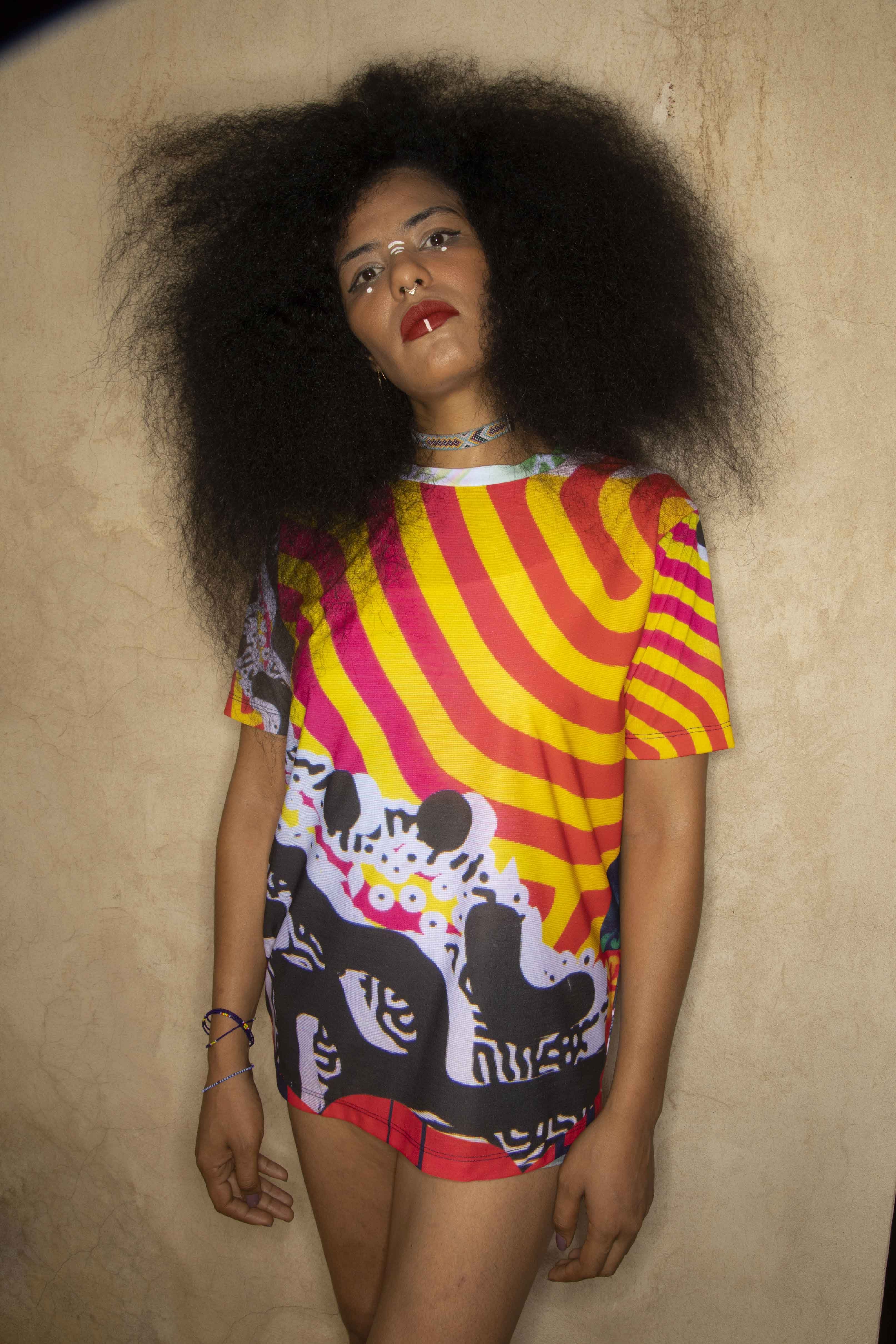
Force Rouge
Vitality and ancestral power — deep red protection symbols from the Amazigh tradition.
Each piece in the collection is produced in strictly limited quantities, printed on high-quality organic cotton, and accompanied by materials that tell the story of the symbols and traditions they draw upon. This is ethical fashion in the fullest sense: thoughtful about materials, honest about origins, and designed to create objects worth keeping rather than discarding.
For the person looking for a unique gift for her — one that combines aesthetic distinction with cultural depth, ethical production with artistic seriousness — this work represents something that is genuinely difficult to find elsewhere. You can explore the full range of available pieces at the collection page.
Gift Ideas by Occasion
Wearable art adapts to almost any occasion where a meaningful gift is called for. The following guide may help you find the right piece at the right moment.
| Occasion | Why Wearable Art Works | Suggested Approach |
|---|---|---|
| Birthday | A birthday calls for something singular — a gift that marks the person's uniqueness rather than a generic acknowledgment | Choose a piece whose colors or symbols reflect the recipient's personality or a theme meaningful to them |
| Holiday Season | Against the backdrop of generic holiday gifting, a cultural artisan piece stands out as genuinely thoughtful | Opt for a limited-edition piece that can be presented as a collectible as much as a garment |
| Wedding / Anniversary | A meaningful cultural gift marks the permanence of a significant relationship with an object built to last | Look for pieces with symbolic resonance — protection, love, union — from the Amazigh symbolic vocabulary |
| Graduation | A transitional moment deserves a gift that speaks to identity, vision, and the person's future self | Choose a piece with motifs related to clarity, strength, or new beginnings |
| Mother's Day | Amazigh textile tradition has historically been a feminine art — the symbolism carries particular resonance for mothers | Consider pieces that incorporate protective or nurturing Berber symbols |
| Just Because | Sometimes the most powerful gifts are the ones with no occasion attached — a pure statement of "I thought of you" | Trust your instinct about which piece most captures something true about the recipient |
For the Art Lover in Your Life
If you know someone who frequents galleries, follows independent artists, and has considered their home a curated space, wearable art is an obvious natural extension of an existing sensibility. The conversation you open — about how we relate to art, about wearing versus displaying — will be as interesting as the object itself.
For the Ethical Fashion Advocate
Someone who has already committed to ethical fashion — who reads labels, supports slow fashion brands, and has made conscious choices about what they wear — will understand immediately and deeply the value of a piece produced with genuine care for materials, origins, and craft. An ethical fashion gift for her from this category is a validation of values as much as a material offering.
For the Curious Traveler
Someone who has traveled through North Africa — or dreams of doing so — will find in a piece of Berber art-inspired wearable clothing a connection to landscapes and cultures that hold deep fascination for them. It may even prompt a trip, or deepen the meaning of one already taken. Pair this gift with the related article on the meaning of Berber symbols for an even richer offering.
For the Person Who Has Everything
The person who seems to need nothing and already own everything presents the most interesting gifting challenge — and the clearest case for a unique artisan gift. What they don't have is something nobody else has. What they don't have is the specific combination of cultural depth, artistic vision, and ethical production that defines truly exceptional wearable art. Give them rarity, not abundance.
The Gift That Keeps Traveling
We began with the observation that the most memorable gifts are the ones chosen with genuine attention. The ones that say: I noticed you. I found something as particular as you are.
A piece of wearable art rooted in Amazigh culture — in the ancient language of Berber symbols, the textile traditions of North Africa, the careful practice of ethical production — offers all of this and something more: it will keep traveling. It will move through the world with the person who wears it, starting conversations, carrying stories, connecting strangers to a civilization that most will never have encountered before.
That is, in the end, what distinguishes a meaningful cultural gift from a merely beautiful object. The beautiful object sits. The cultural gift moves. It participates in the world. It invites questions and offers answers. It is, in the deepest sense, alive.
When you offer art you can wear as a gift, you offer someone a piece of that aliveness — a way of carrying culture, beauty, and meaning with them wherever they go. In a world that generates an overwhelming quantity of forgettable things, that is a genuinely radical act.
The collection awaits. The symbols have been waiting ten thousand years to find new eyes. Your gift-giving occasion is the bridge.
Find the Perfect Cultural Gift
Explore Laetitia Demay's limited-edition wearable art collection — Amazigh tradition reimagined for the contemporary world. Each piece is a unique artisan gift that carries a story.
Explore the Collection